Agriculture & Engineering
Polyhouse Farming: Planning from Crop to Construction
A productive polyhouse starts with the right crop, climate strategy and site plan—not just a structure. Here is what to consider before building.
Choose the right structure
Naturally ventilated polyhouses use vents and insect netting to manage airflow; fan-and-pad systems add active cooling where tighter temperature control is needed. Nursery polyhouses focus on seedling propagation, while farming structures are planned around the crop, growing system and working space. The appropriate option depends on local weather, intended crop and operating budget.
Select crops and a growing method
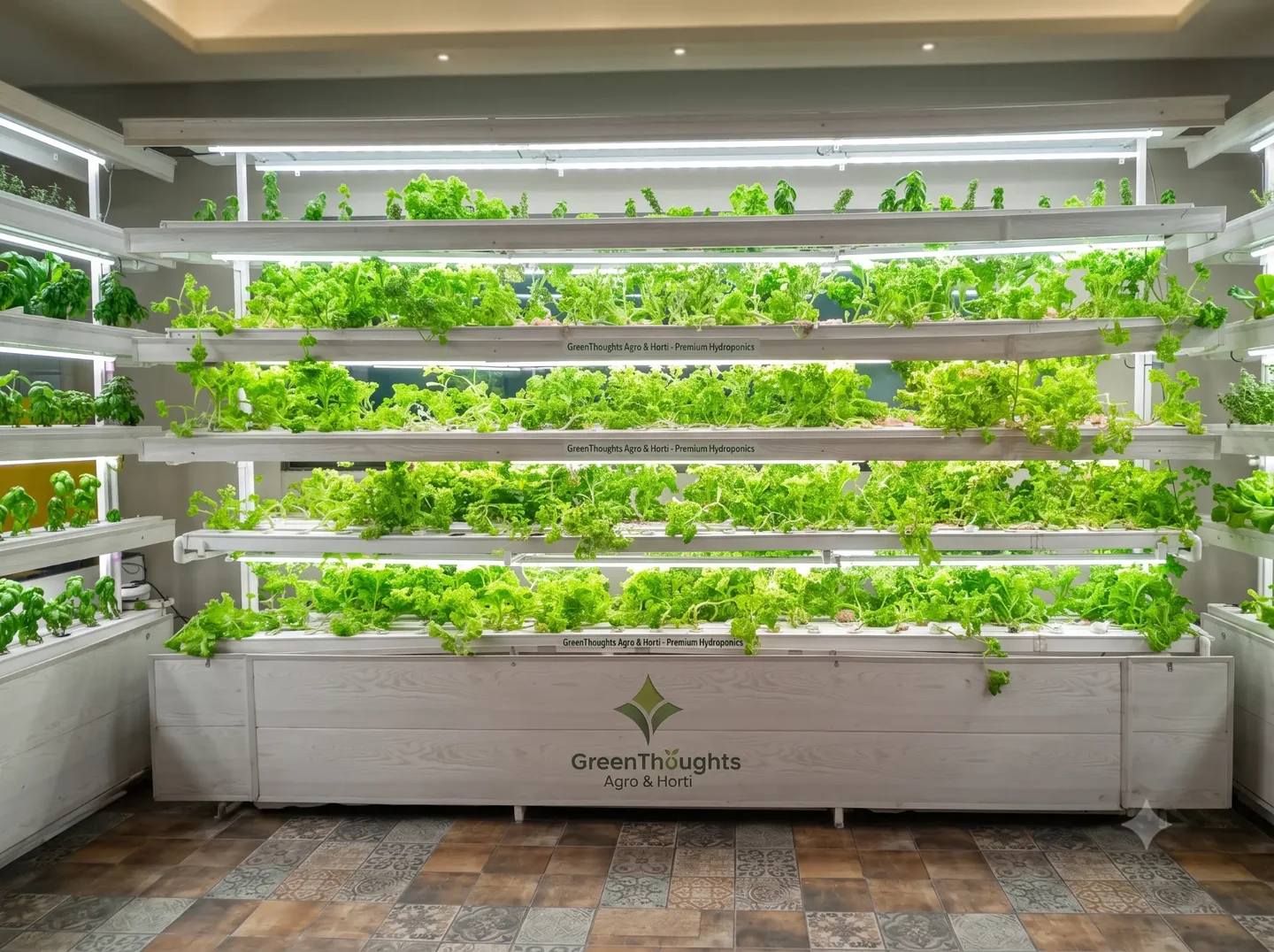
Begin with a crop that has a realistic market and matches the site’s water supply, light and temperature. Vegetables, flowers and nursery seedlings have different spacing, irrigation and ventilation needs. Soil cultivation and hydroponic systems also require different layouts and nutrient management. Decide these before finalising the structure rather than adapting it after installation.
Understand setup costs
There is no useful single price for every polyhouse. Size, site preparation, frame and covering, natural or powered ventilation, drip irrigation, netting and any hydroponic equipment all affect the estimate. Plan separately for ongoing water, power, labour and maintenance. A site survey and crop plan are the best starting points for an itemised quote.
From site survey to installation
Greenthoughts supports turnkey nursery and farming polyhouses, including site survey, structural design, installation, drip irrigation and netting. Share your location, intended crop and approximate growing area so the team can discuss a suitable approach.
Discuss a polyhouse project